
Medical
Additive Manufacturing in the Medical Sector
The medical sector is one of the most mature and rapidly expanding adopters of additive manufacturing. What began as a technology for anatomical models and surgical planning has evolved into a production platform for medical devices, patient-specific implants, surgical guides, prosthetics and emerging pharmaceutical applications.
Today, additive manufacturing is firmly established within clinical workflows, supporting personalised healthcare, improved surgical outcomes and more efficient medical device production. As regulatory frameworks mature and healthcare providers become increasingly familiar with the technology, adoption continues to accelerate across both hospital and commercial healthcare environments.
Market Overview
The global medical additive manufacturing market surpassed approximately £950 million in annual revenues by the middle of the 2020s and industry forecasts indicate it could exceed £2.8 billion by 2030. Growth rates remain among the strongest of any additive manufacturing sector, reflecting increasing clinical acceptance and production scale-up.
A notable trend is the shift from equipment purchases towards outsourced manufacturing and production services. Service providers now account for the largest proportion of market activity, indicating that healthcare organisations and medical device companies are increasingly accessing additive manufacturing through specialist production partners rather than investing directly in manufacturing infrastructure.
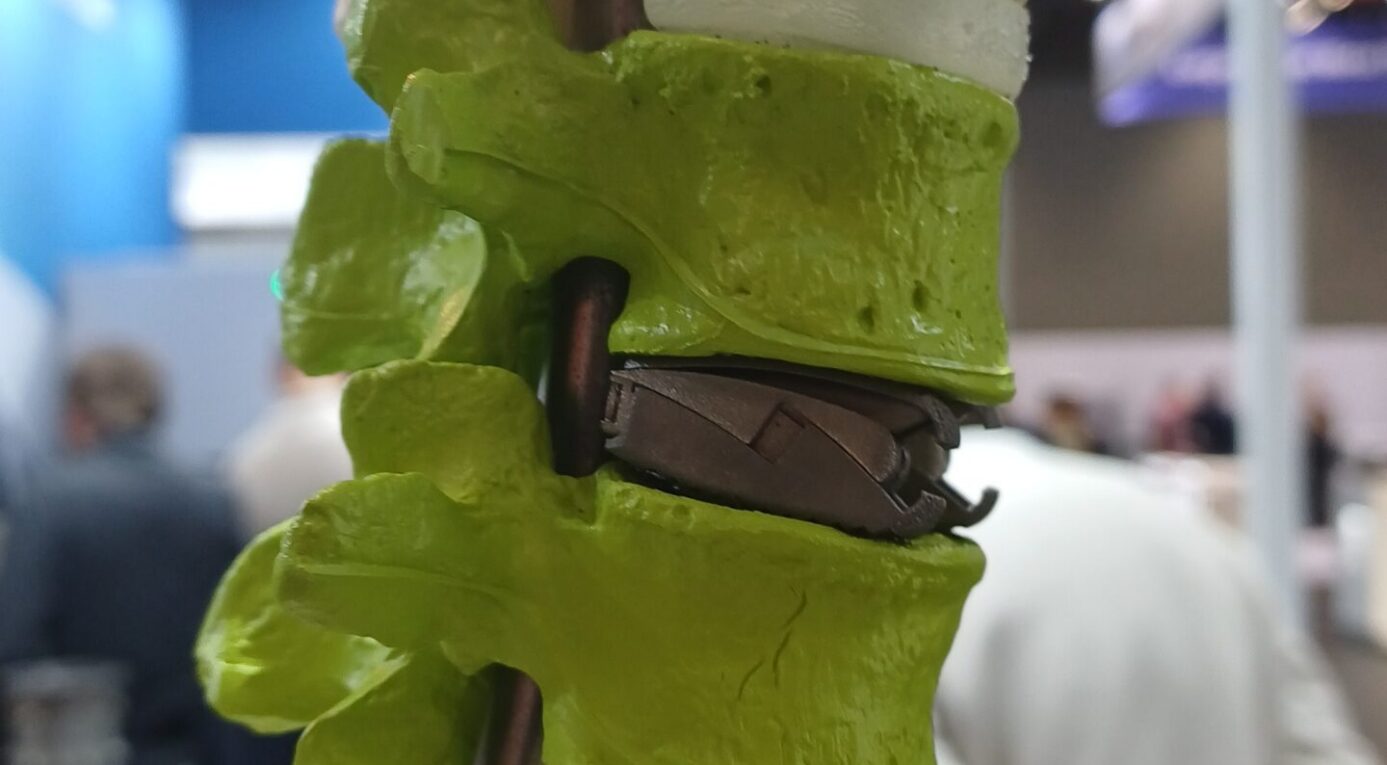
Metal additive manufacturing has emerged as the leading technology category, driven primarily by the serial production of orthopaedic implants, spinal devices and cranio-maxillofacial implants. Polymer technologies continue to play a critical role in surgical planning, anatomical models, prosthetics and patient-specific medical devices, while ceramic materials are developing specialist applications within regenerative medicine and bone reconstruction.
Key drivers of market growth include:
- Increased demand for personalised healthcare.
- Growth in patient-specific implants and devices.
- Expansion of outsourced medical manufacturing services.
- Regulatory acceptance of additively manufactured devices.
- Improvements in material performance and qualification.
- Greater adoption of point-of-care manufacturing.
- Advances in digital surgical planning and healthcare digitisation.
Key Applications
Additive manufacturing is now being used throughout the healthcare ecosystem, supporting both clinical and commercial applications.
Primary applications include:
- Orthopaedic implants.
- Spinal fusion devices.
- Cranio-maxillofacial implants.
- Surgical guides.
- Anatomical models.
- Prosthetics and orthotics.
- Medical training devices.
- Dental applications.
- Veterinary implants and instruments.
- Pharmaceutical dosage forms.
Metal additive manufacturing is particularly important in implant production, where complex porous structures can improve osseointegration and patient outcomes. Titanium and cobalt-chromium alloys remain the dominant materials for load-bearing applications.
Polymer additive manufacturing continues to enable patient-specific solutions, particularly through advanced materials such as PEEK, which offers favourable imaging compatibility, biocompatibility and mechanical performance for selected implant applications.
Healthcare providers are also increasingly leveraging digital surgical planning workflows that combine medical imaging, digital modelling and 3D printed guides to improve procedural accuracy and reduce operating times.
Industrial Benefits
The medical sector benefits from additive manufacturing in ways that extend far beyond manufacturing efficiency alone.
Key advantages include:
- Patient-specific device production.
- Faster treatment planning.
- Reduced lead times for custom implants.
- Improved surgical precision.
- Enhanced clinical outcomes.
- Reduced inventory requirements.
- Streamlined supply chains.
- Lower material waste.
- Greater design freedom.
- Improved implant performance.
Several healthcare applications have demonstrated substantial operational improvements. Surgical planning workflows have reduced operation times by up to 50% in complex procedures, while customised treatment devices have improved targeting accuracy and reduced invasive interventions.
In implant manufacturing, additive manufacturing enables highly porous structures that promote bone integration while reducing component mass. Advanced polymer implant workflows have also demonstrated material savings of up to 85% compared with conventional machining approaches.
Point-of-care manufacturing is emerging as another significant advantage, allowing hospitals to produce approved patient-specific devices closer to the point of treatment and reducing reliance on lengthy external supply chains.
Market Outlook to 2030
The market outlook for medical additive manufacturing remains highly positive.
Industry forecasts indicate continued double-digit growth throughout the remainder of the decade, driven by increasing production volumes, expanding regulatory acceptance and wider integration into healthcare systems.
Several structural trends are expected to shape the sector:
- Continued expansion of contract manufacturing and service bureaus.
- Growth in serial production of metal implants.
- Increased adoption of personalised medical devices.
- Greater use of digital healthcare workflows.
- Wider deployment of point-of-care manufacturing facilities.
- Expansion of advanced polymer implant applications.
- Growing use of biocompatible ceramic materials.
- Commercialisation of pharmaceutical 3D printing technologies.
Material consumption is anticipated to grow faster than hardware sales, reflecting increasing production throughput and higher implant volumes. This trend is particularly evident within metal additive manufacturing, where recurring production programmes generate sustained demand for qualified powders and certified production services.
Regulatory and reimbursement frameworks are also expected to continue evolving, removing barriers to adoption and supporting broader clinical use of additively manufactured medical devices.
By 2030, additive manufacturing is expected to be regarded not merely as a specialist manufacturing technology, but as a fundamental component of modern medical device production and personalised healthcare delivery.
Opportunities for Industry
The strongest opportunities are expected to emerge across:
- Orthopaedic implant manufacturing.
- Spinal and cranio-maxillofacial devices.
- Personalised medicine.
- Surgical planning and anatomical modelling.
- Point-of-care manufacturing.
- Pharmaceutical additive manufacturing.
- Biocompatible material development.
- Medical device contract manufacturing.
- Regulatory and qualification services.
- Veterinary healthcare applications.
For manufacturers, service providers, material suppliers, research organisations and healthcare providers alike, the sector presents significant growth potential. As healthcare systems continue to adopt digital workflows and personalised treatment pathways, additive manufacturing is expected to play an increasingly important role in improving patient outcomes, strengthening supply chain resilience, accelerating innovation and supporting more efficient healthcare delivery through to 2030.