
15-5PH Stainless Steel
UNS S15500 (EN 1.4545, XM-12)
- High strength
- Good corrosion resistance
- Heat treatable
- Wear resistant
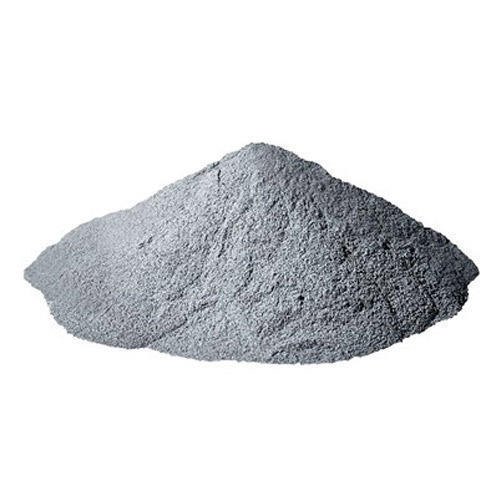
15-5 PH stainless steel is an alloy powder widely used in additive manufacturing due to its versatility in the range of applications that it can be applied to. It is a variant of the older 17-4 PH chromium-nickel-copper
precipitation hardening stainless steel, and was designed to have greater toughness than the S17400 grade. AM metal parts made with 15-5 PH have an excellent combination of strength, and toughness, as well as exhibiting excellent corrosion resistance. This martensitic, precipitation-hardenable 3D printed alloy is commonly selected for high-performance industrial applications including petrochemical, aerospace, and other harsh environments, including nuclear.
15-5 PH stainless steel is age hardenable with a number of well-established standard heat treatment cycles that are just as equally applicable to the AM produced parts as from the conventionally produced metal. Industrial applications of additive manufactured 15-5 PH have included: gears, bolts and valve components, mould dies, high strength pump, engine and aircraft components. In addition, this alloy’s versatility allows it to be used in a wider range of structural components, tooling, and functional prototypes, especially any requiring toughness and strength combined with moderate corrosion resistance up to 316°C.
🏭 Industry Sectors
- Aerospace
- Medical Devices
- Energy and Power Generation
- Industrial Tooling
Composition
| Element | Weight % |
|---|---|
| Fe | Bal. |
| Cr | 14.0 – 15.5 |
| Ni | 3.5 – 5.5 |
| Cu | 2.5 – 4.5 |
| Nb | 0.15 – 0.45 |
| C | <0.07 |
| Mn | <1.00 |
| Si | <1.00 |
| P | <0.03 |
| S | <0.015 |
Alloy Powder Sizes
| Size Distribution | Typical Uses |
|---|---|
| 5–22 µm | Metal Injection Moulding / Binder Jet |
| 15–45 µm | Powder Bed Fusion – LASER / E-beam |
| 20–53 µm | Powder Bed Fusion – LASER / E-beam |
| 45–105 µm | Directed Energy Deposition – Blown Powder (a.k.a. laser cladding) |
| 70–150 µm | Directed Energy Deposition – Blown Powder (a.k.a. laser cladding) |
Heat Treatment
Like the 17-4 PH alloy, the 15-5 PH alloy requires only a simple heat treatment that can be done in a one-step process. This can be conducted at a temperature in the range 485°C to 620°C depending on the combination of strength and toughness that is required.
Solution Treatment (Condition A)
Hold at 1040°C for 30 – 60 minutes and cool to below 30°C in air or water. Oil quenching may be used for small
non-intricate sections before final cooling to below 30°C.
Precipitation Hardening (Aging)
A small amount of shrinkage has been observed during hardening; approximately 0.05% for Condition H900 and 0.10% for H1150.
The Condition is designated by the age hardening temperature (H) in °F (Condition A is solution treated, i.e. not aged).
Key Materials Properties
| Property Type | Property | Value (H900 condition) |
|---|---|---|
| Mechanical | Yield Strength | 1200 – 1300 MPa |
| Mechanical | Ultimate Tensile Strength | 1300 – 1400 MPa |
| Mechanical | Elongation to break | > 10% |
| Mechanical | Young’s Modulus | 195 GPa |
| Mechanical | Hardness (HRC) | 44 – 47 |
| Mechanical | High Cycle Fatigue limit | ~400 MPa * |
| Thermal | Conductivity at 100°C | 17 W/m·K |
| Thermal | Expansion Coefficient | 11 µm/m·°C |
| Electrical | Resistivity | 0.77 µΩ·m |
| Physical | Corrosion Resistance | Excellent (in atmospheric and mild environments) |
Corrosion Resistance
The conventionally produced stainless steel exhibits good resistance to a wide range of corrosive environments, and has similar resistance to the more common 304 grade. Like 304, 15-5PH is subject to pitting and crevice corrosion in the presence of chloride, and when used in sea water applications this is with the addition of cathodic protection. In general, the corrosion resistance of 15-5 PH stainless steel also generally superior to that of the hardenable 400 series stainless steels.
15-5PH becomes more resistant to stress corrosion cracking (SCC) when aged at 550°C (H1025) or higher, improving with higher aging temperatures. However, SCC increases dramatically for this stainless steel after solution treatment, in Condition A, and it should not generally be used in this condition. The untempered martensite may increase the risk of brittle fractures, which is made worse in corrosive environments.
Heat Resistance
15-5PH has good resistance to oxidation, but it is not recommended that it is used above its age hardening temperature. This is to avoid a reduction of its mechanical properties and hardness. Prolonged exposure in the range 370-480°C (just below the age hardening rage) should be avoided if ambient temperature toughness is a critical requirement.
Welding
AM 15-5PH can be successfully welded by all standard methods. Preheating is recommended as well as welding in Condition A.
- Preheat: Use 200-300°C (400-600°F) to lower the risk of hydrogen cracking and reduce residual stresses.
- Where necessary, use matching filler rods made from 17-4PH to maintain composition and properties
- Post-weld heat treatment (PWHT) should follow solution annealing and aging to restore properties in the heat-affected zone (HAZ).
Machining
Post-process machine finishing is best achieved in the solution treated condition. Machinability is then like Grade 304.
- Use high-speed steel (HSS) or carbide tools with TiN or TiAlN coatings
- Apply appropriate cutting fluids to reduce tool wear
- Adjust cutting parameters based on the material’s hardness level (H1025, H1100 etc)