
6061 Aluminium powder
UNS A96061 (EN AW-6061; AA6061, AlMg1SiCu)
- Lightweight alloy with excellent corrosion resistance
- Good strength-to-weight ratio and fatigue performance
- High thermal conductivity
- Heat-treatable to T6 condition for high strength
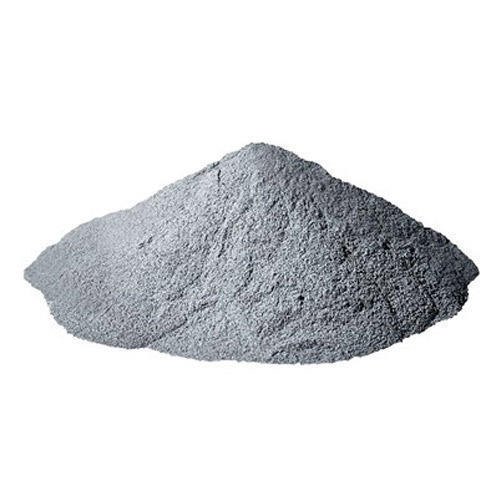
6061 Aluminium powder is a precipitation-hardened aluminium alloy primarily alloyed with magnesium and silicon. It offers a balanced combination of strength, corrosion resistance, and workability, making it one of the most widely used aluminium alloys for structural and engineering applications. In additive manufacturing, 6061 powder enables lightweight, high-strength components for aerospace, automotive, and industrial sectors.
🏭 Industry Sectors
- Aerospace: Structural components, heat exchangers
- Automotive: Lightweight performance parts
- Marine: Fittings, deck structures
- Industrial: Heat transfer and dynamic load-bearing parts
Composition
| Element | Weight % |
|---|---|
| Al | Balance |
| Si | 0.4 – 0.8 |
| Mg | 0.8 – 1.2 |
| Fe | ≤ 0.7 |
| Cr | 0.04 – 0.35 |
| Mn | ≤ 0.15 |
| Cu | 0.15 – 0.4 |
| Zn | ≤ 0.25 |
| Ti | ≤ 0.15 |
| B | ≤ 0.002 |
Alloy Powder Sizes
| Size Distribution | Typical Uses |
|---|---|
| 10 to 90 µm | Binder jetting |
| 15 to 60 µm | Laser – Powder Bed Fusion (L-PBF) |
| 15 to 106 µm | Electron beam – Powder Bed Fusion (E-PBF) |
| 45 to 180 µm | Direct Energy Deposition (DED) |
Heat Treatment
- Solution Treatment: ~540 °C for up to 60 min, water quench
- Aging (T6): 160–180 °C for 6 – 18 hours
- HIP (optional): Improves density and fatigue properties
Note: Shortened solution treatments are often used for AM parts to preserve fine microstructure.
Key Materials Properties
| Property Type | Property | Value |
|---|---|---|
| Mechanical | Yield Strength | 200 – 270 MPa |
| Mechanical | Ultimate Tensile Strength | 280 – 330 MPa |
| Mechanical | Elongation to break | 8 – 12% |
| Mechanical | Young’s Modulus | 69 GPa |
| Mechanical | High Cycle Fatigue limit | |
| Mechanical | Hardness | 95 HB |
| Thermal | Conductivity | 151-202 W/m.K |
| Thermal | Expansion Coefficient | 23.2 ×10⁻⁶ /°C |
| Electrical | Resistivity | 3.9 μΩ.cm |
| Physical | Corrosion Resistance | Good |
Corrosion Resistance
6061 exhibits excellent corrosion resistance in atmospheric and marine environments due to its protective oxide layer. It performs well in fresh water and mild industrial conditions.
Heat Resistance
Maintains mechanical integrity up to ~150–200 °C. Above this range, strength decreases significantly.
Welding
Excellent weldability using TIG and MIG processes. However, the heat-affected zone (HAZ) experiences strength reduction in T6 condition; post-weld heat treatment can restore properties.
Machining
Good machinability, especially in T6 temper. Use sharp tools, high cutting speeds, and adequate lubrication to avoid built-up edge.