
AlSi10Mg Aluminium
UNS A13600 (A360.0, LM9, EN AC-43000)
- Good strength
- Good corrosion resistance
- High thermal and electrical conductivity
- Fully heat treatable
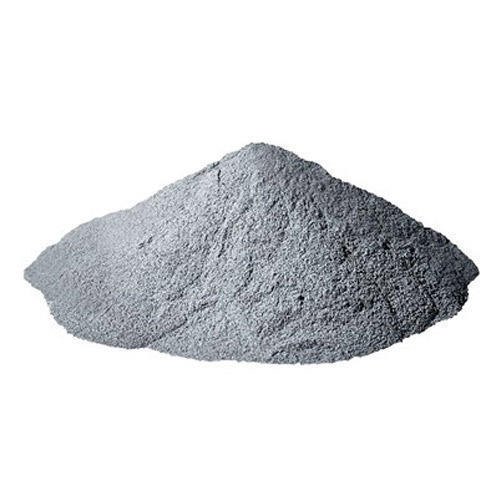
AlSi10Mg aluminium alloy is a widely used alloy that is lightweight and has good mechanical properties. This alloy can be used in the as-built condition or after any one of several different heat treatments. Like many aluminium alloys it is reported to have good thermal and electrical conductivity, so is now used in a lot of energy exchange applications. This material has moderate strength up to about 120°C but loses strength quickly at elevated temperatures (above 150 – 200°C). It has good corrosion resistance in many environments.
Industrial applications of additive manufactured AlSi10Mg aluminium are: gearboxes, control housings, brackets heat exchanger, engine parts, pump housings.
- Aerospace
- Automotive
- Tooling
- Consumer Electronics
Composition
| Element | Weight % |
|---|---|
| Al | Bal. |
| Si | 9.00 – 11.00 |
| Mg | 0.25 – 0.45 |
| Fe | 0.55 |
| Cu | 0.05 |
| Mn | 0.45 |
| Ni | 0.05 |
| Zn | 0.10 |
| Sn | 0.05 |
| Ti | 0.15 |
Alloy Powder Sizes
| Size Distribution | Typical Uses |
|---|---|
| 25 – 70 µm | Binder jetting |
| 20 – 63 µm | Laser – Powder Bed Fusion (L-PBF) |
| 20 – 90 µm | Electron beam – Powder Bed Fusion (E-PBF) |
| 20 – 145 µm | Direct Energy Deposition (DED) |
Heat Treatment
This aluminium alloy can be used in many conditions, and the heat treatment of AlSi10Mg varies a great deal from different suppliers. The most common treatment is a single step stress relieving operation, which some claim is also a hardening step. However, many users prefer a standard T6 condition, for which parts must first be solution treated, then quenched, and followed by artificial aging.
Typical cycles (assuming inert atmosphere or vacuum):
A. Stress relieve at 270 – 300°C for up to 120 min followed by cooling in air (ASTM F3318-18).
B. Solution HT at 550°C for 30 mins minimum, followed by quenching in water or salt bath. Age harden at 160 – 190°C for 4-8 hours, followed by cooling to room temperature, inert/air.
| Property Type | Property | Value |
|---|---|---|
| Mechanical | Yield Strength | 160 – 230 MPa |
| Mechanical | Ultimate Tensile Strength | 300 – 450 MPa |
| Mechanical | Elongation to break | 3 – 10 % |
| Mechanical | Young’s Modulus | 70-80 GPa |
| Mechanical | High Cycle Fatigue limit | 90 – 120 MPa |
| Mechanical | Hardness | 80 – 100 Hv |
| Thermal | Conductivity | 150 – 170 W/m.K |
| Thermal | Expansion Coefficient | 21 µm/m.K |
| Electrical | Resistivity | 4.6 μΩ.cm |
| Electrical | Conductivity | 44 % IACS |
| Physical | Corrosion Resistance | Very Good |
Welding
Welding can be challenging due to the high silicon content but can be achieved using TIG, e-beam, or laser welding.
Machinability
It is recommended to use none coated carbide cutting tools
- Carbide grade cutting tools
- Work piece must be clamped stable
- 200-850 m/min cutting speed