
Cobalt-Chrome
UNS R30075 (CoCr28Mo6, 2.4979, ASTM F75)
- High strength
- High corrosion and temperature resistance
- Excellent biocompatibility
- Good wear and erosion resistance
- Great elevated temperature performance
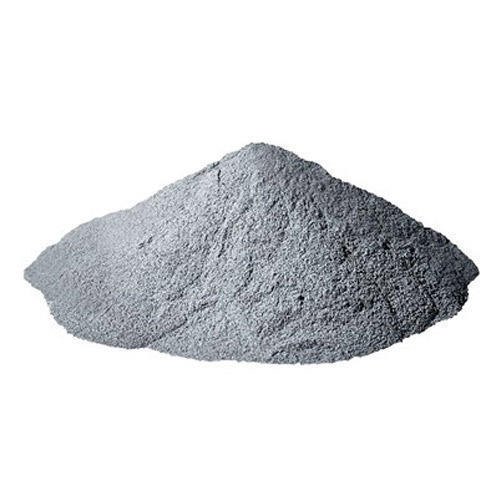
Cobalt-chrome alloy (Co-Cr) powders are amongst the most widely used in the AM sector and cover a very diverse range of applications. This group of alloys have been deployed across various industries because of their exceptional properties. However, the selection of a specific alloy composition is dependent on the application, AM process, and regulatory requirements.
Cobalt-chromium powders are widely used in sectors from aerospace to dental and medical, from offshore exploration to industrial tooling. The unique combination of cobalt and chromium offers several advantages, such as excellent corrosion resistance, high-temperature stability, and superior mechanical properties. This makes Co-Cr alloys ideal for producing parts that endure harsh environments and demanding conditions. Their corrosion resistance is better than that of stainless steel. However, the ASTM F75 casting variant has been adapted for use in critical medical applications due to its proven biocompatibility, and accounts for about 45% of the global AM use of these alloys.
Though these powders are often simply referred to as Cobalt-Chrome, they contain other crucial alloying elements which have been selected and tuned to the applications they have been developed for. Hence, in general, the cobalt-chrome alloys have additions of molybdenum (Mo) and nickel (Ni). Tungsten (W) is found in many Co-Cr alloys, but specifically in the dental alloys; matching the Mo content (5 -6 %), or up to 10 % when there is no Mo. Other common alloying additions include titanium (Ti), iron (Fe), manganese (Mn), silicon (Si) and aluminium (Al). Carbon is usually very tightly controlled in these alloys and can range for 0 % to 0.4 %. The most commonly used is the medical grade ASTM F75 alloy (CoCr28Mo6). However, this can be substituted with UNS R30021 (Stellite® 21) for all none medical applications.
🏭 Industry Sectors
- Biomedical
- Aereospace
- Energy and offshore
- Automotive
Composition
Chemical Composition Comparison (wt%)
| Element | ASTM F75 (UNS R30075) | Stellite 21 (UNS R30021) | Notes on Similarity |
|---|---|---|---|
| C | 0.20 – 0.35 | 0.20 – 0.30 | Both are low-carbon Co–Cr–Mo alloys |
| Cr | 27.0 – 30.0 | 26.0 – 30.0 | Main corrosion resistance element. |
| Mo | 5.0 – 7.0 | 5.0 – 6.0 | Mo adds pitting resistance & solid-solution strengthening. |
| Ni | ≤ 1.0 | ≤ 2.5 | Higher permitted Ni in Stellite 21. |
| Fe | ≤ 0.75 | ≤ 1.0 | Very similar, low Fe to preserve corrosion resistance. |
| Mn | ≤ 1.0 | ≤ 1.0 | Used as a deoxidizer in castings. |
| Si | ≤ 1.0 | ≤ 1.0 | Improves flowability in castings. |
| Co | Balance | Balance | Cobalt matrix gives high-temp strength & wear resistance. |
| Others | ≤ 0.5 (each), ≤ 1.0 (total) | — | Minor impurities allowed in F75 standard. |
Alloy Powder Sizes
| Size Distribution | Typical Uses |
|---|---|
| 5–22 µm | Metal Injection Moulding / Binder Jet |
| 15–45 µm | Powder Bed Fusion – LASER / E-beam |
| 20–53 µm | Powder Bed Fusion – LASER / E-beam |
| 45–105 µm | Directed Energy Deposition – Blown Powder (a.k.a. laser cladding) |
| 70–150 µm | Directed Energy Deposition – Blown Powder (a.k.a. laser cladding) |
Heat Treatment
Stress relieving & solution annealing heat treatments increase ductility and toughness of the metal parts
Stress relieve:
- Load parts into the furnace when it is cold (preferably with Ar gas purge).
- Heat up to 750°C at a rate of 20°C/min.
- Hold at 750°C for 1 – 8 hrs, depending on size of parts.
- Furnace or air cool to room temperature.
Solution anneal (for toughness and strength):
- Load parts into the furnace when it is cold (preferably with Ar gas purge).
- Heat up to 650°C at a rate of 20°C/min.
- Hold at 650°C for 30mins.
- Heat up to 1050°C at a rate of 10°C/min.
- Hold at 1050°C for 2 – 4 hrs, depending on size of parts.
- Quench (a) with gas to below 760°C, furnace cool under Ar to below 400°C, followed by air cooling to room temperature, or (b) immediately after soaking in air to room temperature, or (c) rapid quench in water.
Key Materials Properties
| Property Type | Property | Value (indicative figures only) |
|---|---|---|
| Mechanical | Yield Strength | 600 – 800 MPa |
| Mechanical | Ultimate Tensile Strength | 850 – 1400 MPa |
| Mechanical | Elongation to break | 10 – 30 % |
| Mechanical | Young’s Modulus | 230 GPa |
| Mechanical | Hardness | 35 – 40 HRC |
| Mechanical | High Cycle Fatigue limit | 600 MPa |
| Thermal | Conductivity | 12 – 15 W/m·K |
| Thermal | Expansion Coefficient | 15.5 µm/m·°C |
| Physical | Durability | Excellent resistant to wear and oxidation. |
| Physical | Corrosion Resistance | Excellent resistance to corrosion, especially in biological environments. |