
CP1 Aluminium powder
AA 8A61.50 (Al–Fe–Zr)
- High strength and ductility
- Excellent thermal and electrical conductivity.
- Thermal stability up to ~260–300 °C
- Simplified single‑step ageing heat treatment.
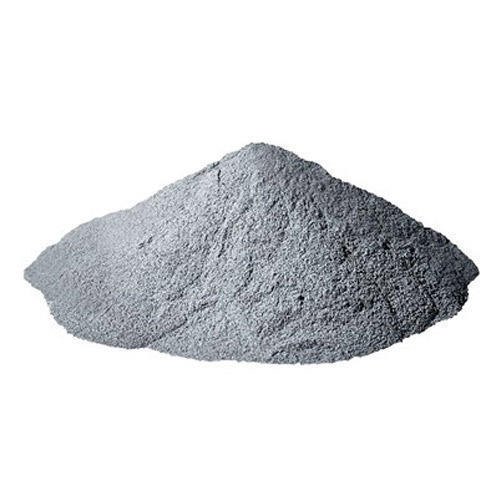
CP1 Aluminium powder, or Aheadd® CP1, is Constellium’s Al–Fe–Zr alloy engineered specifically for Laser Powder Bed Fusion (LPBF). Its very simple composition avoids volatile elements (e.g., Mg, Zn) and rare earths, enabling consistent printing, and simplified post‑processing (no quench). Gaining in popularity is has been used for heat exchangers, thermally loaded lightweight parts, and structural components.
🏭 Industry Sectors
- Aerospace: lightweight, thermally efficient structures.
- Motorsport & Automotive: compact heat exchangers, manifolds, brackets.
- Defence & Industrial: high productivity AM of heat‑managed components.
Composition
| Element | Weight % |
|---|---|
| Al | Balance |
| Zr | 0.9 – 1.4 |
| Fe | 0.8 – 1.45 |
Alloy Powder Sizes
| Size Distribution | Typical Uses |
|---|---|
| 20-63µm | Binder jetting |
| 20-63µm | Laser – Powder Bed Fusion (L-PBF) |
| 20-63µm | Electron beam – Powder Bed Fusion (E-PBF) |
| 20-63µm | Direct Energy Deposition (DED) |
Heat Treatment
- Single cycle: 4 h at 400 °C in air (no tight ramp up or cooling control needed).
Key Materials Properties
| Property Type | Property Aheadd® CP1 | Value |
|---|---|---|
| Mechanical | Yield Strength | 130 – 300 MPa |
| Mechanical | Ultimate Tensile Strength | 200 – 335 MPa |
| Mechanical | Elongation to break | 10 – 20 % |
| Mechanical | Young’s Modulus | 68 GPa |
| Mechanical | High Cycle Fatigue limit | |
| Mechanical | Hardness | ~ 60 HB |
| Thermal | Conductivity | 190 W/m.K |
| Thermal | Expansion Coefficient | 23.4 x 10^-6 /°C |
| Electrical | Conductivity | ~27.7–31.0 MS/m |
| Physical | Corrosion Resistance |
Corrosion Resistance
Comparative testing shows excellent corrosion performance versus conventional AM Al‑Si alloys. Note: CP1 is Si‑free and supports chemical polishing, decorative anodising (Type II) and hard anodising (Type III).
Heat Resistance
Is reported to maintain strength up to 300 °C.
Welding
Based on LPBF application, this alloy should exhibit good weldability.
Machining
Machinability is likely to be similar to other AM aluminium alloys.