
GR-COP42
NASA-developed Cu-Cr-Nb alloy
- Exceptional thermal conductivity
- High strength and creep resistance at elevated temperatures
- Excellent oxidation resistance in high-temperature environments
- Designed for additive manufacturing of rocket engine components
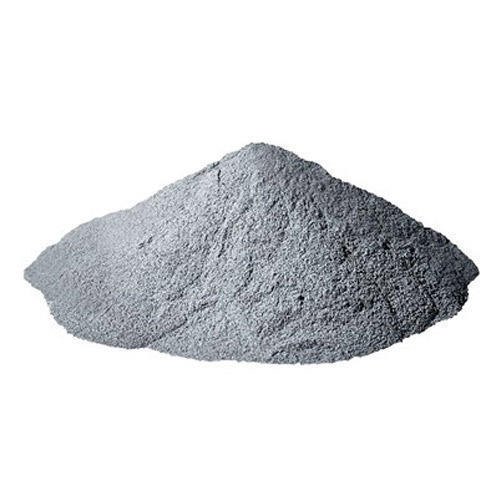
GR-Cop-42 is a high-performance copper alloy developed by NASA, consisting of copper strengthened with chromium and niobium. It combines excellent thermal conductivity with superior high-temperature strength and oxidation resistance, making it ideal for combustion chamber liners, nozzles, and other components in liquid rocket engines. Its microstructure is optimised for additive manufacturing processes such as Laser Powder Bed Fusion (LPBF) and Directed Energy Deposition (DED).
🏭 Industry Sectors
- Space: Regeneratively cooled, liquid bi-propellant thrust chambers
- Aerospace: High temperature components
- Advanced thermal management with high conductivity needs in temperatures up to 800 °C
- High thermal transfer applications where pure Cu is too weak
Composition
| Element | Weight % |
|---|---|
| Cu | Balance |
| Cr | 3.3 – 4.1 |
| Nb | 1.9 – 2.9 |
Alloy Powder Sizes
| Size Distribution | Typical Uses |
|---|---|
| 10–22 µm | Binder Jet |
| 15–53 µm | Powder Bed Fusion – LASER / E-beam |
| 45–105 µm | Directed Energy Deposition – Blown Powder (a.k.a. laser cladding) |
| 70–150 µm | Directed Energy Deposition – Blown Powder (a.k.a. laser cladding) |
Heat Treatment
- Stress Relief: 500–600 °C for 1–2 hours
- HIP (optional): Improves density and fatigue properties
Note: GR-Cop-42 is typically used in the as-built or HIPed condition; no precipitation hardening is required.
Key Materials Properties
| Property Type | Property | Value (H900 condition) |
|---|---|---|
| Mechanical | Yield Strength | 190 – 340 MPa |
| Mechanical | Ultimate Tensile Strength | 330 – 540 MPa |
| Mechanical | Elongation to break | 25 – 30 % |
| Mechanical | Young’s Modulus | 135 GPa |
| Mechanical | Hardness | 80 – 90 HRB |
| Mechanical | High Cycle Fatigue limit | |
| Thermal | Conductivity at 20°C | 320–350 W/m·K |
| Thermal | Expansion Coefficient at 20°C | ~5 ×10⁻⁶ /°C |
| Electrical | Resistivity | 2.0 μΩ.cm |
| Physical | Corrosion Resistance |
Corrosion Resistance
GR-Cop-42 offers good oxidation resistance at elevated temperatures due to the formation of a protective oxide layer. However, it is not designed for corrosive chemical environments and should be protected from aggressive media.
Heat Resistance
Maintains mechanical integrity and thermal conductivity up to ~700 °C, making it suitable for combustion chamber and nozzle applications in rocket engines.
Welding
GR-Cop-42 is weldable using AM processes and certain fusion welding techniques, but preheating and controlled cooling are recommended to minimise residual stresses.
Machining
Machinability is good compared to other high-performance alloys. Use sharp carbide tools, high cutting speeds, and adequate cooling to maintain surface finish and dimensional accuracy.