
H13 steel powder
UNS T20813 (EN 1.2344, X40CrMoV5-1)
- High toughness and hot hardness for demanding tooling applications
- Good wear resistance and dimensional stability at elevated temperatures
- Excellent resistance to thermal fatigue and heat checking
- Suitable for LPBF and DED
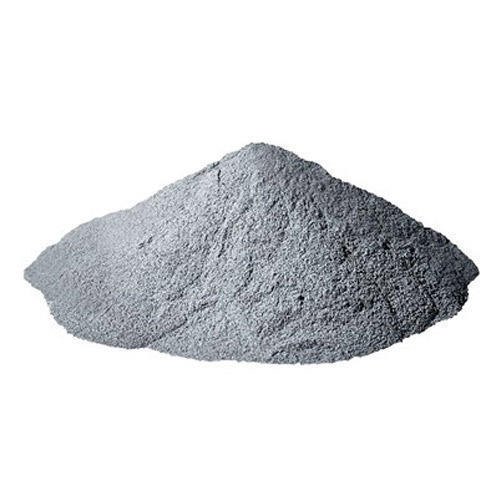
H13 steel is a chromium-molybdenum-vanadium hot work tool steel widely used for tooling applications that require high strength, toughness, and resistance to thermal fatigue. It is commonly applied in die casting, extrusion, and forging tools, as well as molds for plastics. In additive manufacturing, H13 enables the production of complex geometries such as conformal cooling channels, improving tool performance and service life, and is widely used for aluminium and zinc casting dies, and press tooling. It is ideal for a range of hot work and cold work applications, particularly hot work applications where drastic cooling is required throughout its operation.
🏭 Industry Sectors
- Die casting and extrusion tooling
- Hot forging dies and inserts
- Plastic injection mould tooling
- Aerospace and automotive tooling
- High-performance industrial components
Composition
| Element | Weight % |
|---|---|
| Fe | Balance |
| Cr | 4.75 – 5.50 |
| Mo | 1.10 – 1.7 |
| V | 0.80 – 1.20 |
| C | 0.32 – 0.45 |
| Si | 0.8 – 1.20 |
| Mn | 0.20 – 0.50 |
| P | ≤ 0.03 |
| S | ≤ 0.03 |
Alloy Powder Sizes
| Size Distribution | Typical Uses |
|---|---|
| 10 to 90 µm | Binder jetting |
| 15 to 60 µm | Laser – Powder Bed Fusion (L-PBF) |
| 15 to 106 µm | Electron beam – Powder Bed Fusion (E-PBF) |
| 45 to 180 µm | Direct Energy Deposition (DED) |
Heat Treatment
- Preheating: 600–850 °C in two steps for complex parts
- Austenitising: 1010 –1050 °C
- Quenching: Air or gas cooling; oil quench for large sections
- Tempering: 540 – 620 °C, double temper recommended
- HIP (optional): Improves density and fatigue resistance
Note: Printing at elevated temperatures (>200 °C) is recommended to minimize cracking in AM builds.
Key Materials Properties
| Property Type | Property | Value |
|---|---|---|
| Mechanical | Yield Strength | 1200 – 1650 MPa |
| Mechanical | Ultimate Tensile Strength | 1500 – 2100 MPa |
| Mechanical | Elongation to break | 8 – 10% |
| Mechanical | Hardness | 46-54 HRC |
| Mechanical | High Cycle Fatigue limit | |
| Mechanical | Young’s Modulus | 210 GPa |
| Thermal | Conductivity | 28–32 W/m·K (20 °C) |
| Thermal | Expansion Coefficient | 10.4 ×10⁻⁶ /°C |
| Electrical | Resistivity | |
| Physical | Corrosion Resistance | Good |
Corrosion Resistance
H13 offers moderate corrosion resistance due to its chromium content but is not stainless. It performs well in hot work environments but should be protected from prolonged exposure to moisture or corrosive chemicals.
Heat Resistance
Maintains hardness and strength up to ~540 °C and resists thermal fatigue cracking under cyclic heating and cooling.
Welding
H13 can be welded using preheating and post-weld heat treatment to avoid cracking. AM builds often require elevated build plate temperatures to reduce residual stresses.
Machining
Machinability is about 55–70% of that of plain carbon steel. Use rigid setups, carbide tooling, and cutting speeds of 125–275 m/min for milling and turning.