
Nickel 718 powder
UNS N07718 (NiCr19NbMo, Inconel® 718)
- High strength at elevated temperatures
- Excellent high temperature corrosion resistance.
- Excellent ductility up to 704°C.
- Stable physical properties at low temperature.
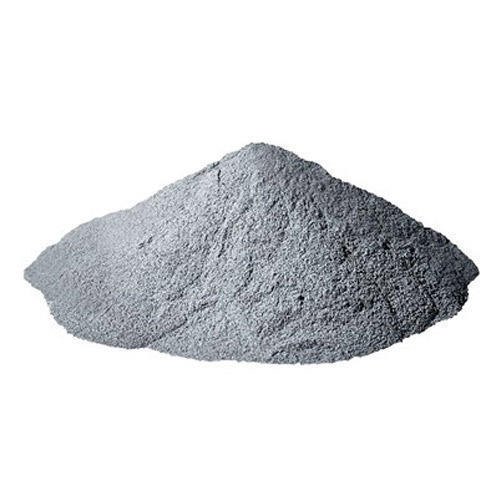
Nickel 718, known to most as Inconel® 718, is a nickel-chromium alloy with high strength and corrosion resistance. It is used at temperatures ranging from -253° to 705°C, though in some modern applications this has been extended to even higher temperatures. As a metal in the group of super alloys, it combines excellent yield strength with, fatigue, creep-rupture strength, and corrosion resistance. From conventional metallurgy, this alloy gets it’s strength from a well-established heat treatment involving solution annealing, and a two stage age hardening process. However, AM parts can also be used in the as-built condition, assuming that residual stress is not a limiting factor, and also with a number of custom heat treatment cycles. Nickel 718 can be readily fabricated into very complex parts, and its welding characteristics are also outstanding.
Industrial applications of Nickel 718 in additive manufacturing have included: F1 exhausts, liquid-fueled rockets, aero-engine rings and casings, and land-based gas turbine, cryogenic components, and many more where high temperature performance is required.
🏭 Industry Sectors
- Aerospace
- Industrial Gas Turbines
- Oil & Gas
- Automotive
- Nuclear
- Defense
Composition
| Element | Weight % |
|---|---|
| Fe | Bal. |
| Ni | 50.0 – 55.0 |
| Cr | 17.0 – 21.0 |
| Nb,Ta | 4.75 – 5.5 |
| Mo | 2.80 – 3.30 |
| Ti | 0.65 – 1.15 |
| Al | 0.20 – 0.80 |
| Co | ≤1.0 |
| C | ≤0.08 |
| Mn | ≤0.35 |
| Si | ≤0.35 |
| Cu | ≤0.30 |
| P | ≤0.015 |
| S | ≤0.015 |
| B | ≤0.006 |
Alloy Powder Sizes
| Size Distribution | Typical Uses |
|---|---|
| 20 to 90 µm | Binder jetting |
| 20 to 60 µm | Laser – Powder Bed Fusion (L-PBF) |
| 15 to 105 µm | Electron beam – Powder Bed Fusion (E-PBF) |
| 45 to 180 µm | Direct Energy Deposition (DED) |
Heat Treatment – ASM 5663
Stage 1: Solution Treatment
Hold at 985°C for 60 – 120 minutes and cool to below 30°C
Stage 2: Precipitation Hardening (Aging)
Hold at 720°C for 8 hours followed by cooling to 620°C, hold at 620°C for 8 hours, slow cool to below 400°C and then cool to room temperature in air.
Key Materials Properties
| Property Type | Property | Value (Aged) / HT 650°C |
|---|---|---|
| Mechanical | Yield Strength | >1100 MPa / >1000 MPa |
| Mechanical | Ultimate Tensile Strength | >1300 MPa / >1100 MPa |
| Mechanical | Elongation to break | 15 % / 20 % |
| Mechanical | Young’s Modulus | 200 GPa |
| Mechanical | High Cycle Fatigue limit | |
| Mechanical | Hardness | 32-40 HRC |
| Thermal | Conductivity | 11.4 W/m·K |
| Thermal | Expansion Coefficient | 12.8 µm/m·°C |
| Physical | Corrosion Resistance | Excellent |
| Physical | Oxidation Resistance | Excellent |
Welding
Welding of alloy 718 can be performed using all the traditional welding methods but for AM parts should be carried out in the Solution Anneal condition. It is recommended that a matching alloy filler metal be used, and in the case of AM these can be produced along with the part. Preheating is not required. The surfaces to be welded need to be very clean and have to be free from oil and grease.
Machinability
Nickel alloy 718 can be machined but is said to have poor machinability, especially in the hardened condition. Even in the solution annealed condition the alloy work hardens during machining so tool wear can be an issue.
- Cutting tools with CBN inserts are recommended for the best result, or tools with PVD / CVD coatings.
- Apply appropriate cutting fluids to reduce tool wear
- Recommended cutting parameters for milling, 25-40 m/min