
M300 steel powder
UNS K93120 (EN 1.2709, ASTM A646)
- High strength
- Good corrosion resistance
- Heat treatable
- Wear resistant
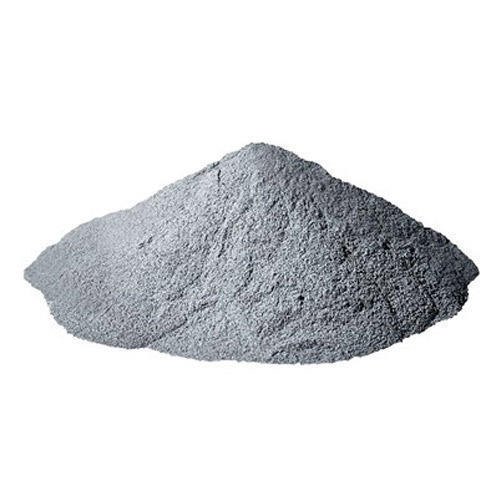
M300 maraging steel powder is one of the most widely used metal powders. The M300 alloy is a very high strength steel that has an almost carbon free martensitic matrix. This alloy can be used in the as-built condition, as well as the full strength condition; well in excess of 2000 MPa in some cases. The strength comes from precipitates that form during a relatively straightforward aging process. A range of temperatures can be used for aging, which relies on the Mo, Co, Ti and Al in the alloy to form second phases in the annealed martensite. M300 maraging steel has excellent weldability, thermoplasticity and processability, also possessing good toughness.
In industrial applications that normally rely on high carbon tool steels, such as H13 or M2, for a great deal of tooling and moulding applications, are made readily accessible with M300 maraging steel, particularly in laser Powder Bed Fusion. This widely used steel offers a comparable alternative in terms of mechanical properties and ease of processing.
Uses of M300 steel in additive manufacturing include: automotive, aerospace, mould and die, tooling, structural components, and high-stress applications
🏭 Industry Sectors
- Aerospace
- Injection moulding
- Automotive
- High strength components
Composition
| Element | Weight % |
|---|---|
| Fe | Bal. |
| Co | 8.0 – 10.0 |
| Ni | 17.0 – 19.0 |
| Mo | 4.50 – 5.20 |
| Ti | 0.10 – 1.20 |
| C | ≤ 0.03 |
| Si | ≤ 0.10 |
| Mn | ≤ 0.15 |
| Al | < 0.15 |
| Cr | < 0.30 |
Alloy Powder Sizes
| Size Distribution | Typical Uses |
|---|---|
| 5–22 µm | Metal Injection Moulding / Binder Jet |
| 15–53 µm | Powder Bed Fusion – LASER / E-beam |
| 20–63 µm | Powder Bed Fusion – LASER / E-beam |
| 45–105 µm | Directed Energy Deposition – Blown Powder (a.k.a. laser cladding) |
| 70–150 µm | Directed Energy Deposition – Blown Powder (a.k.a. laser cladding) |
Heat Treatment
M300 maragaing steel can be used without any heat treatment. However, if parts are very large or contain complex geometric features that there could be a requirement for stress relieving. This alloy can typically be stress relieved and solution annealed as a single process by heating to 820 – 870°C for a minimum of 30 minutes at temperature. This can be followed by air cooling to room temperature.
If high strength is required, then M300 can be aged at 485°C for a minimum of 3 hours followed by air cooling. Note, M300 AM parts can be directly aged using this cycle without any prior solution annealing. For this it is recommended that parts are put in the pre-heated furnace and held for a minimum of 5 hours, and maximum of 8 hours.
Key Materials Properties
| Property Type | Property | Value |
|---|---|---|
| Mechanical | Yield Strength | as built >950 MPa Age hardened >1700 MPa |
| Mechanical | Ultimate Tensile Strength | as built >1000 MPa Age hardened >1800 MPa |
| Mechanical | Elongation to break | as built 7 – 12% Age hardened ~ 5% |
| Mechanical | Young’s Modulus | as built ~160 GPa Age hardened ~170 GPa |
| Mechanical | High Cycle Fatigue limit | |
| Thermal | Conductivity at 20°C | 14.2 W/m·K |
| Thermal | Expansion Coefficient | 10.3 µm/m·°C |
| Electrical | Resistivity | 0.49 µΩ·m |
| Physical | Corrosion Resistance |
Machining
Post-process machine finishing of M300 is normally only carried out in the Solution Annealed condition (see above). Annealed hardness is typically 30 Rc. Due to the high hardness, limited machining can be performed in the age-hardened condition, even after just a short H1150 treatment.