
CoCrW alloy powder
UNS R30006 (EN 2.4979; Haynes® Stellite 6)
- Excellent wear and galling resistance under severe conditions
- Outstanding corrosion and oxidation resistance at high temperatures
- Maintains hardness and strength up to ~500–600 °C
- Used in offshore applications
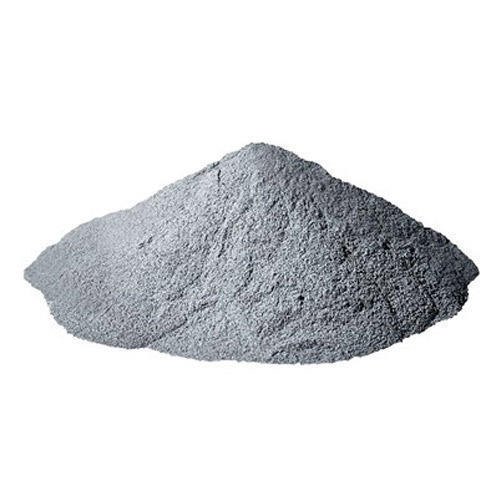
CoCrW alloy powder, is a cobalt-based alloy containing chromium, tungsten, and carbon, designed for exceptional wear resistance, corrosion resistance, and high-temperature performance. It is widely used in valve seats, cutting tools, and components exposed to severe sliding wear and corrosive environments. In additive manufacturing, Stellite® 6 is applied for repair, surface enhancement, and production of wear-resistant parts.
🏭 Industry Sectors
- Oil & Gas: Valve seats, sealing surfaces
- Power Generation: Turbine components, wear rings
- Aerospace: Hot-section wear parts
- Industrial: Cutting tools, extrusion dies
Composition
| Element | Weight % |
|---|---|
| Co | Balance |
| Cr | 27 – 32 |
| W | 3 – 6 |
| C | 0.9 – 1.4 |
| Ni | < 3.0 |
| Fe | < 3.0 |
| Mn | < 1.0 |
| Si | < 1.0 |
Alloy Powder Sizes
| Size Distribution | Typical Uses |
|---|---|
| Binder Jet | |
| 15–53 µm | Powder Bed Fusion – LASER / E-beam |
| 45-105 µm | Electron Beam Melting (EBM) |
| 50-150 µm | Directed Energy Deposition – Blown Powder (a.k.a. laser cladding) |
Heat Treatment
CoCrW alloy is typically used in the as-built or as-deposited condition. No conventional heat treatment is required; properties are inherent to the alloy microstructure. HIP (optional) can be applied to improve density and fatigue resistance in AM parts.
Note: PBF processes often require an elevated powder bed/platform temperature to process this alloy.
Key Materials Properties
| Property Type | Property | Value (H900 condition) |
|---|---|---|
| Mechanical | Yield Strength | ~600 – 800 MPa |
| Mechanical | Ultimate Tensile Strength | ~900 – 1200 MPa |
| Mechanical | Elongation to break | 1 – 3 % |
| Mechanical | Young’s Modulus | 210 GPa |
| Mechanical | Hardness | 38–45 HRC |
| Mechanical | High Cycle Fatigue limit | |
| Thermal | Conductivity at 100°C | ~14 W/m·K |
| Thermal | Expansion Coefficient | ~13.5 ×10⁻⁶ /°C |
| Electrical | Resistivity | ~1.1 ×10⁻⁶ Ω·m |
| Physical | Corrosion Resistance |
Corrosion Resistance
Provides excellent resistance to corrosion in oxidising and mildly reducing environments, including resistance to chloride attack and many organic acids.
Heat Resistance
Maintains hardness and wear resistance up to ~500–600 °C, with good oxidation resistance up to ~1000 °C in air.
Welding
Can be welded using TIG, plasma transferred arc (PTA), or laser. Preheating is generally not required, but controlled cooling minimises cracking.
Machining
Machinability is poor due to high hardness and work hardening tendency. Use carbide or ceramic tooling, rigid setups, and low cutting speeds with adequate coolant.