
Ti6Al4V alloy powder powder
UNS R56400 – (Ti64, Grade 5, Grade 23 (ELI))
- Excellent strength-to-weight ratio
- High corrosion resistance
- Excellent biocompatibility
- Good osseointegration
- Low thermal expansion
- Low thermal conductivity
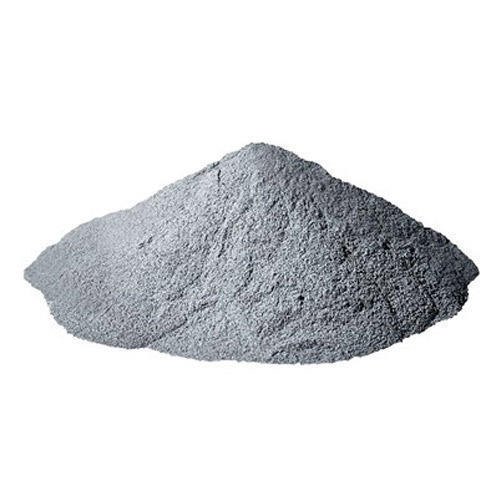
Ti6Al4V is an alpha-beta alloy and considered the workhorse alloy of the titanium industry. The alloy is fully heat treatable and is used from cryogenic temperatures up to approximately 425°C without significant loss in performance. In industry, its uses span from aerospace airframes and engine component to applications in the marine, offshore and power generation industries, and medical sectors in particular. Significantly lower density than steel, resulting in an excellent strength-to-weight ratio for mechanical properties, combined with excellent corrosion resistance, and good bio-compatibility.
Ti6Al4V ELI (Grade 23) is the grade of choice for many aerospace applications, but considered essential when used for surgical and dental applications.
🏭 Industry Sectors
- Medical and dental
- Aerospace and defence
- Motor sport
- Jewellery and art
- Maritime applications
- Oil & Gas and Power Generation
Composition
| Element | Weight % |
|---|---|
| Ti | Bal. |
| Al | 5.5-6.5 |
| V | 3.5-4.5 |
| O | ≤0.15 |
| N | ≤0.03 |
| C | <0.08 |
| H | ≤0.012 |
| Fe | ≤0.25 |
Alloy Powder Sizes
| Size Distribution | Typical Uses |
|---|---|
| 20 to 90 µm | Binder jetting |
| 15 to 63 µm | Laser – Powder Bed Fusion (L-PBF) |
| 15 to 105 µm | Electron beam – Powder Bed Fusion (E-PBF) |
| 45 to 180 µm | Direct Energy Deposition (DED) |
Heat Treatment
This titanium alloy can be used in many conditions, and the heat treatment of Ti6Al4V is very complex by virtue that very small changes in the chosen cycle can lead to significant differences in materials properties. The presence of any oxygen, or air, in the furnace will result in oxidation, and this leads to discolouration range from light blue to dark grey, and a host of rainbow colours in between. Oxidation will also affect mechanical properties of the surface regions, from a phenomenon call “alpha-case”.
Typical cycles (assuming inert atmosphere or vacuum):
A. Stress relieve at 650°C for ½ – 4 hours followed by cooling to below 400°C and then cool to room temperature, inert/air.
B. Solution HT at 930°C for 30 mins minimum, followed by rapid water quenching. Age harden at 540°C for 2-4 hours, followed by cooling to room temperature, inert/air.
C. Anneal: 690 – 760°C for ½ to 2 hours followed by air or furnace cool to room temperature.
| Property Type | Property | Value |
|---|---|---|
| Mechanical | Yield Strength | 850 – 1000 MPa |
| Mechanical | Ultimate Tensile Strength | 900 – 1200 MPa H |
| Mechanical | Elongation to break | 7 – 15% |
| Mechanical | Young’s Modulus | 110 GPa |
| Mechanical | High Cycle Fatigue limit | |
| Mechanical | Low Cycle Fatigue limit | |
| Thermal | Conductivity | 6.7 W/mK |
| Thermal | Expansion Coefficient | 8.6 µm/m·K |
| Electrical | Resistivity | 1.7 μΩ.cm |
| Physical | Corrosion Resistance | Excellent |
Welding
Welding of Ti6Al4V alloy is easy to perform in the annealed condition, or in the solution and partially aged condition. Final aging can be completed during the post weld heat treatment. Every effort must be taken to prevent oxygen, nitrogen, and hydrogen contamination. Hence, welding in inert gas filled chambers, or using inert gas shielding is highly recommended. If weld filler rods are required, these can be produced with the AM build.
Machinability
Ti6Al4V can be machined but it is notoriously difficult and is not recommend in the as-built or hardened condition. Machining is best carried out in the stress-relieved or solution annealed condition following the same practices as for austenitic stainless steels.
- Rigid tooling with hard coatings
- Apply large amounts of non-chlorinated cutting fluid
- Use slower cutting speeds